News
Our products are exported to over 30 countries.
Possess the full-process development capability from concept design to mass production and implementation

Possess the full-process development capability from concept design to mass production and implementation
Baking Methods for Semiconductor Devices and PCBs: Guidelines for Process Engineers
For process engineers working with PCB assembly and semiconductor device manufacturing, understanding the correct baking methods is crucial for quality control. When PCBs exceed their shelf life or are exposed to humidity, they must be baked before Surface Mount Technology (SMT) assembly to prevent defects like delamination and popcorning (board explosion during reflow). Baking removes moisture from the PCB substrate and components, and ensures that when the board reaches the appropriate temperature, the flux activates correctly for optimal solder joint formation.
Below is a technical guide on PCB storage specifications and baking protocols, aligned with industry standards.
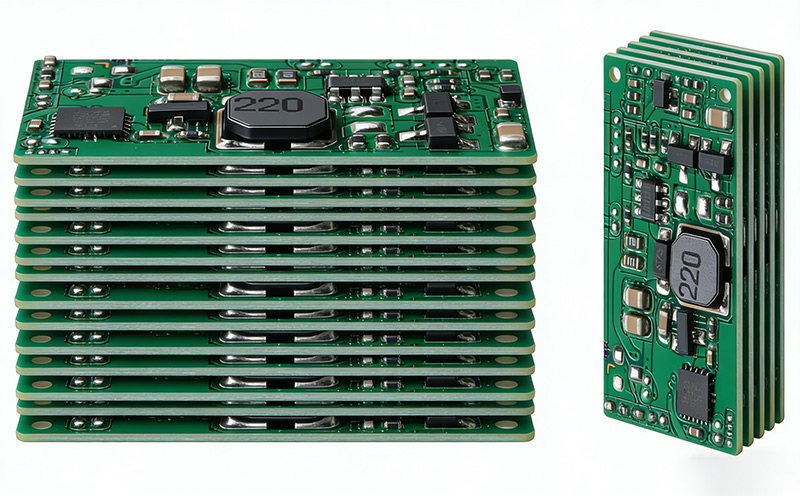
I. PCB Handling and Storage Standards
Unpacking and Storage Conditions:
Sealed, Unopened: If the manufacturing date is within 2 months, the PCBs can be used immediately for SMT production without baking.
Opened Packages: Once a vacuum-sealed package is opened, the date must be marked on the package.
Floor Life: For boards manufactured within 2 months, they must be used within 5 days of opening the package.
II. PCB Baking Specifications
The required baking time is determined by the age of the PCB and its storage conditions. The standard baking temperature is 120°C ± 5°C.
Condition A: Manufacturing date within 2 months, but opened for more than 5 days.
Bake Time: 1 hour.
Condition B: Manufacturing date exceeding 2 months (but less than 6 months).
Bake Time: 1 hour.
Condition C: Manufacturing date between 2 to 6 months.
Bake Time: 2 hours.
Condition D: Manufacturing date between 6 to 12 months.
Bake Time: 4 hours.
Condition E: Manufacturing date exceeding 1 year.
Bake Time: 4 hours at 120°C, followed by returning to the PCB fabricator for re-tinning (re-HASL) before use.
Post-Baking Shelf Life: Baked PCBs must be used within 5 days (processed through IR Reflow). If not used within this period, they require an additional 1-hour bake before use.
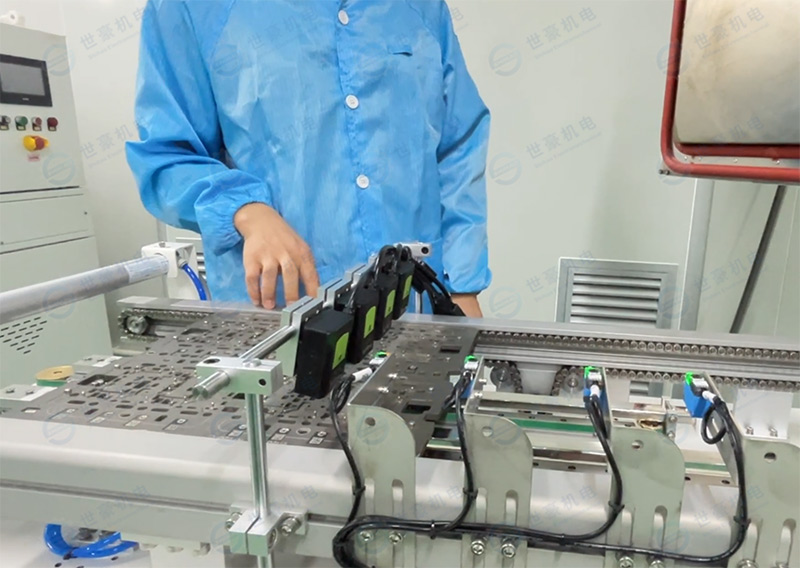
III. Recommended Baking Procedures
To prevent physical damage like warping, the loading configuration inside the oven is critical:
Large PCBs (e.g., 16 ports and above):
Method: Place horizontally (flat stack).
Stack Limit: Maximum 30 pieces per stack.
Cooling: Open the oven within 10 minutes of the cycle completing. Remove the boards and place them flat to cool to room temperature, using a weight or anti-warping fixture to prevent deformation.
Medium/Small PCBs (e.g., 8 ports and below):
Method: Can be placed horizontally (max 40 pieces per stack) or vertically (no quantity limit).
Cooling: Same as above; ensure boards are cooled flat to room temperature.
IV. Regional and Process Considerations
Baking parameters are not static; they depend on the PCB surface finish, fabricator capability, and geographic location.
Surface Finish: Boards with OSP (Organic Solderability Preservative) are generally not recommended for baking, as high heat can degrade the organic coating. OSP and Immersion Gold boards typically have a sealed shelf life of 6 months.
Humidity (Regional Impact):
High-Humidity Regions (e.g., Southern China during "Monsoon/Back to Wet" seasons): PCBs absorb moisture rapidly. Once opened, boards should ideally be used within 8 hours. Extended baking times may be necessary compared to standard protocols.
Arid Regions: Shelf life is naturally longer, and baking times can sometimes be minimized, though standard protocols should always be the first reference.
V. Safety and Quality Protocols for Baking
Environment: Regularly verify that the storage environment (temperature/humidity) meets the specified MSL (Moisture Sensitivity Level) requirements.
Personnel: Only trained personnel are authorized to handle and operate baking equipment.
Monitoring: If any anomalies occur during the baking cycle (temperature fluctuations, timer errors), notify engineering immediately.
Handling: Always use ESD-safe practices. Wear insulated gloves when handling hot PCBs to prevent burns and contamination.
Material Segregation: Lead-based and Lead-free materials must be stored and baked in separate ovens or clearly defined, separate cycles to avoid cross-contamination.
Cool Down: PCBs must be cooled to room temperature before they are sent to the SMT line for assembly or returned to packaging.
VI. Critical Process Notes for Engineers
Safety First: Always wear heat-resistant gloves when removing boards from the oven.
Timing Accuracy: Bake times must be strictly controlled. Insufficient baking leaves moisture trapped; over-baking can oxidize pads and reduce solderability.
Thermal Shock: Forcing a board to reflow while hot from the oven can cause warpage. Always ensure boards are at room temperature before starting the SMT process.
As a manufacturer of baking and curing equipment, we understand that precise control over these variables is essential for yield optimization. Following these guidelines ensures that your PCBs and semiconductor devices are properly prepared for reliable assembly.
19 years of focus on research and development as well as production