News
Our products are exported to over 30 countries.
Possess the full-process development capability from concept design to mass production and implementation

Possess the full-process development capability from concept design to mass production and implementation
In screen printing, spray coating, and PCB solder mask processes, "incomplete ink curing" is a common challenge that troubles process engineers. When facing issues such as tacky surfaces, poor adhesion, or insufficient abrasion resistance, many engineers instinctively respond by extending baking time.
But is this truly the most effective solution?
This article examines the principles of infrared wavelength matching to reveal the science behind ink curing and provide genuinely effective solutions.
Many engineers mistakenly believe that "longer baking means better curing." However, if the infrared radiation wavelength doesn't match the absorption characteristics of the ink, extended baking time merely results in "ineffective heating."
Core Principle: Infrared curing is fundamentally a radiant energy transfer process. Only when the infrared wavelength matches the absorption wavelength of the ink's molecular functional groups can energy be effectively absorbed and converted into internal energy to promote cross-linking reactions.
Simply extending time can lead to:
Surface over-curing: Aging and yellowing of the ink layer
Incomplete internal curing: "False drying" where the surface cures but interior remains uncross-linked
Increased energy consumption: Higher production costs
Reduced production efficiency: Constrained line speed
Conclusion: The key to solving the problem isn't "how long to bake," but "how to bake"—specifically, selecting the appropriate infrared wavelength.
Infrared emitters can be classified into three types based on wavelength, and different ink types exhibit selective absorption properties:
| Wavelength Type | Wavelength Range | Application Characteristics |
|---|---|---|
| Short-wave IR | 0.78–1.1 μm | Strong penetration, suitable for thick films; but low water absorption efficiency |
| Medium-wave IR | 2.2–3.5 μm | Optimal for water-based inks—water's IR absorption peaks at 3.0μm and 4.5μm |
| Long-wave IR | >3.6 μm | Primarily surface heating, slower reaction, poor penetration |
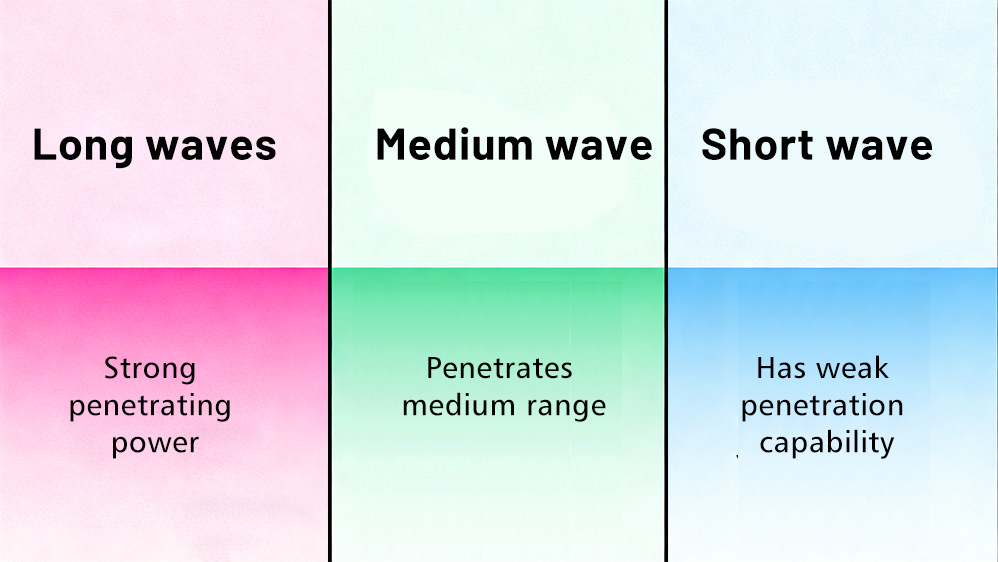
Water-based ink drying requires substantial moisture evaporation. Water's infrared absorption peaks are primarily at 3.0μm and 4.5μm, making medium-wave IR (2.2–3.5μm) the optimal choice.
Research indicates that compared to traditional short-wave emitters, carbon medium-wave infrared emitters can save 30% energy when drying water-based coatings while achieving higher drying efficiency.
Solvent-based ink drying involves both solvent evaporation and resin cross-linking mechanisms. Medium-wave IR balances heating efficiency and penetration, making it the most cost-effective choice for most applications.
PCB solder mask curing demands higher energy density. High-infrared technology (high radiant energy density, high emissivity coefficient, full-band powerful radiation) enables rapid temperature rise, fast drying, and quick curing, reducing curing time to a fraction of traditional oven methods.
| Application Scenario | Recommended Wavelength | Selection Basis |
|---|---|---|
| Water-based ink/varnish drying | Medium-wave IR (2.2–3.5μm) | Matches water absorption peak at 3.0μm |
| PCB solder mask curing | Fast medium-wave/Carbon medium-wave | High energy density requirement |
| Thick film coating drying | Short-wave + Medium-wave combination | Short-wave penetration + Medium-wave absorption |
| Surface heating primarily | Long-wave IR | Cost-sensitive, thin-layer applications |
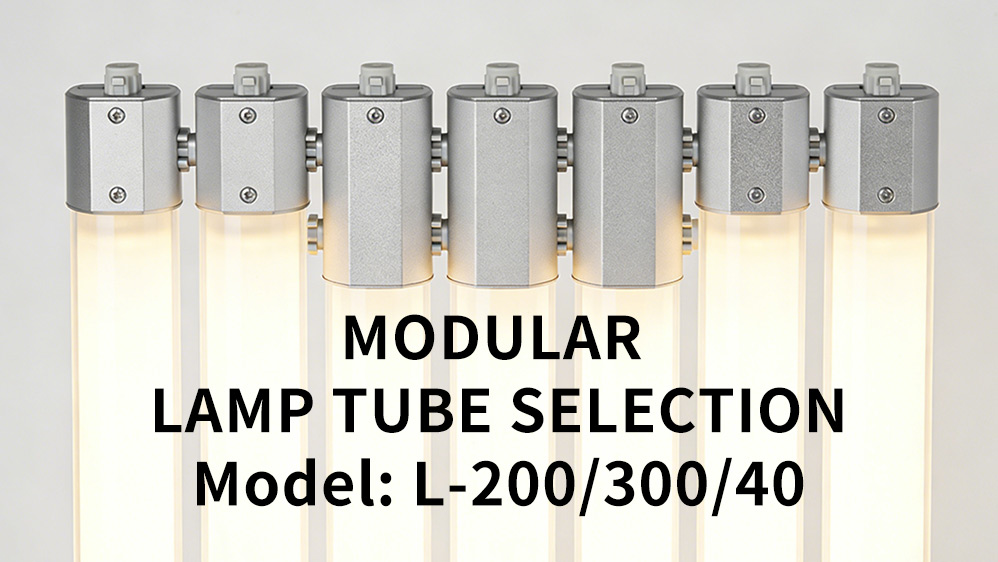
For rapid drying applications requiring high energy density, fast medium-wave and carbon medium-wave IR offer significant advantages:
Higher power density
Fast response time
Precise temperature control
Significant energy savings—carbon fiber emitters save 30% energy compared to traditional short-wave emitters
Medium-wave lamps can be equipped with gold-plated reflectors, which offer higher reflection efficiency than standard aluminum reflectors. They resist oxidation in high-temperature environments, remain unaffected by dust accumulation, and provide better long-term stability.
As a specialized manufacturer of automated curing equipment, we recognize that the "one-size-fits-all" approach is obsolete. Based on different ink characteristics, we offer modular lamp selection options:
Water-Based Ink Dedicated Models: Standard medium-wave IR lamps perfectly matching the 3.0μm absorption peak
PCB Solder Mask Models: Fast medium-wave/carbon medium-wave lamps providing high energy density radiation
Hybrid Curing Models: Short-wave + Medium-wave combination balancing penetration and absorption efficiency
Multi-zone Independent Control: Each zone can independently set power and wavelength combinations
Closed-Loop Feedback System: Real-time temperature monitoring with automatic output adjustment
Temperature Uniformity: ≤±1.5°C (9-point testing)
Challenge: PCB solder mask exhibited "false drying"—surface cured but interior incompletely cross-linked, leading to ink peeling in subsequent processes
Solution: Replaced original long-wave heating with fast medium-wave IR lamps, increasing energy density by 50%
Results:
Curing time reduced by 60%
Adhesion improved (Cross-cut test: 5B)
"False drying" completely eliminated
| Step | Check Point | Solution |
|---|---|---|
| 1 | Is wavelength matching? | Select appropriate IR lamp based on ink type |
| 2 | Is energy density sufficient? | Consider high-energy options like fast/carbon medium-wave |
| 3 | Is baking time optimized? | Adjust equipment parameters rather than simply extending time |
For water-based ink processing: Medium-wave IR offers the best cost-performance ratio
For PCB solder mask processing: Fast medium-wave/carbon medium-wave solutions recommended
For multiple ink types: Choose modular equipment with switchable lamp configurations for different products
The root cause of incomplete ink curing often lies not in "insufficient time," but in "incorrect energy." By understanding the absorption characteristics of different inks for infrared wavelengths and selecting appropriate IR lamps, you can achieve fast, deep curing while resolving poor ink adhesion issues.
If you're struggling with ink curing challenges or seeking IR lamp wavelength selection guidance for specific inks, our process engineering team welcomes your consultation. We provide customized infrared curing solutions based on your ink type, film thickness, and production requirements, with complimentary sample testing available.
19 years of focus on research and development as well as production